This site links to starlink.com with the site owner’s own referral code. If you order through it, Starlink may give the owner a referral reward; your price is the same. How we make money.
Changes log · Help center
Starlink publishes expected speeds for each new plan tier
Starlink's US Specifications document, republished Mar 11, 2026, gives expected download and upload ranges for Residential 100 Mbps, Residential 200 Mbps, Roam and Priority, and sends Residential Max buyers to a map. A Fair Use Policy update followed on Mar 19.
Primary sourceBackground
Change dated Published
BackgroundThis change happened more than 90 days before we published this post. It’s here for context, because it still shapes what a US buyer sees today. Check the source date before relying on it.
The short version
- What changed?
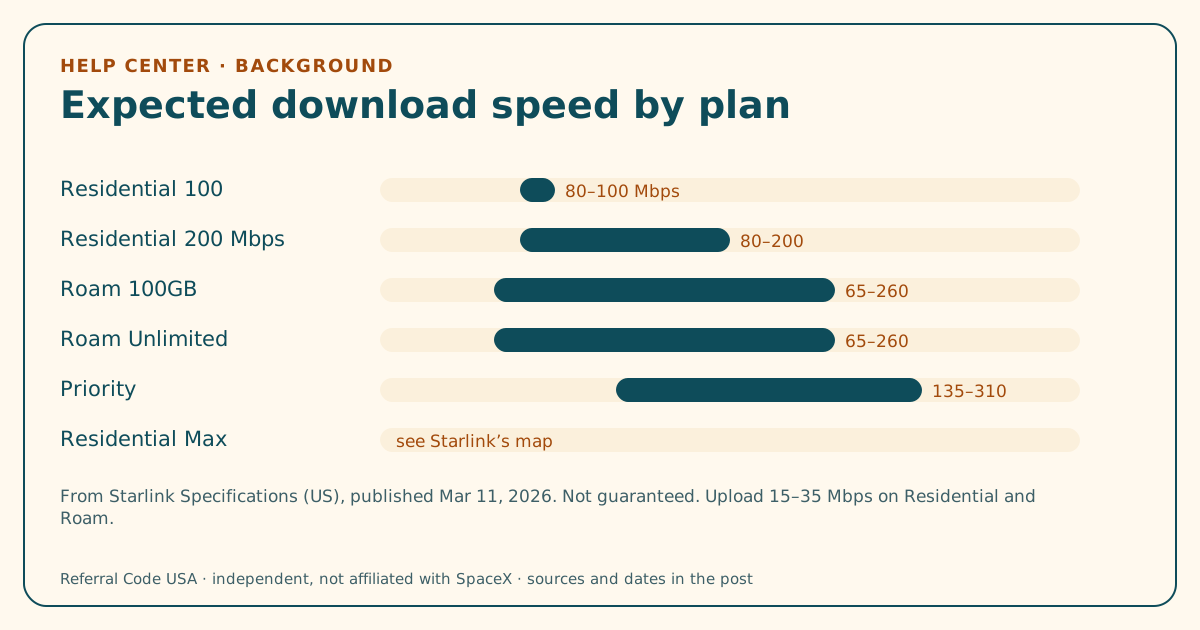
- The Starlink Specifications document for the US now has a table of expected speeds by plan. It includes 80–100 Mbps down for Residential 100, 80–200 Mbps for Residential 200 Mbps, and 65–260 Mbps for Roam plans. Residential Max links to Starlink's coverage map instead of giving a range.
- When did it change?
- Specifications published Mar 11, 2026. Fair Use Policy published Mar 19, 2026 (Starlink's legal list). We read both on Oct 6, 2026.
- Who is affected?
- Anyone choosing between plan tiers, which is the choice a referral link leads you to on the order page.
- What should you do now?
- Before picking a tier, compare the expected range with what your household needs. For Residential Max, check the map for your area. None of this involves a code.
- What stays the same?
- Starlink still says stated speeds aren't guaranteed and can drop at busy times. Availability is still stated as 99% or more for every listed plan.
What happened
Starlink keeps a legal document called Starlink Specifications that says what service it expects to deliver on each plan. The US version was republished on Mar 11, 2026, two months after the plan lineup was renamed by speed (see our post on the renamed plans). Its table now matches the new names. A week later, on Mar 19, 2026, Starlink republished its US Fair Use Policy. This post is Background because both dates are more than 90 days ago.
Expected speeds, from the Specifications
| Plan | Download | Upload | Availability |
|---|---|---|---|
| Residential 100 | 80–100 Mbps | 15–35 Mbps | 99% or more |
| Residential 200 Mbps | 80–200 Mbps | 15–35 Mbps | 99% or more |
| Residential Max | See Starlink’s map | See map | 99% or more |
| Roam 100GB and Pause | 65–260 Mbps | 15–35 Mbps | 99% or more |
| Roam Unlimited | 65–260 Mbps | 15–35 Mbps | 99% or more |
| Priority | 135–310 Mbps | 20–44 Mbps | 99% or more |
The document adds three points. Plans with a data limit drop to low-speed data, about 500 Kbps, once the limit is reached. Standby Mode offers up to 500 Kbps. Customers in remote places such as oceans, islands, Alaska and northern Canada can expect higher latency.
What the Fair Use Policy adds
The Fair Use Policy explains how Starlink manages congestion. It describes balancing supply and demand by location and time. It says Starlink treats traffic “equally, without discrimination based on content”. It reserves the right to reduce speeds “for some or all users” to prevent or ease congestion. It also says data is distributed partly by letting users choose among plans “with performance differences”.
Why this belongs on a code site
People don’t usually connect speed tables with referral codes. But the referral link takes you to one decision on the order page: which plan to pick. The free month is worth one month of whatever eligible plan you choose. So knowing what each tier is expected to deliver is the one piece of research that changes what you get. A code doesn’t change the speed of any plan. Our myths page covers the “VIP code for faster speeds” claim.
What you can check now
- Compare the ranges above with your household’s needs. Starlink’s help center suggests Residential 100 Mbps for 1–3 people with basic use.
- For Residential Max, open Starlink’s coverage map and look at your area’s figures.
- Our glossary explains Mbps, latency and Standby Mode. The FAQ lists which plans the referral covers.
What stays the same
Starlink still says stated speeds aren’t guaranteed. There’s still no code box, and no code changes plan performance.
What we don’t know yet
- We didn't save the earlier Specifications text, so we can't list exactly which ranges changed on Mar 11 (checked 2026-10-06).
- The Residential Max figures are published only on an interactive map, which we can't quote as text.
Sources
“Actual speeds may be lower than expected speeds during times of high usage.”
Something out of date? Report it.
Corrections log
No corrections yet. If we fix anything here, the date, what was wrong and what’s right now will be listed in this box.
Independent · not affiliated with SpaceX. The site owner may get a referral reward if you order Starlink with the site’s referral code; that never decides what we report, and nothing in this post depends on whether you use a code. How this site makes money · How we check claims.